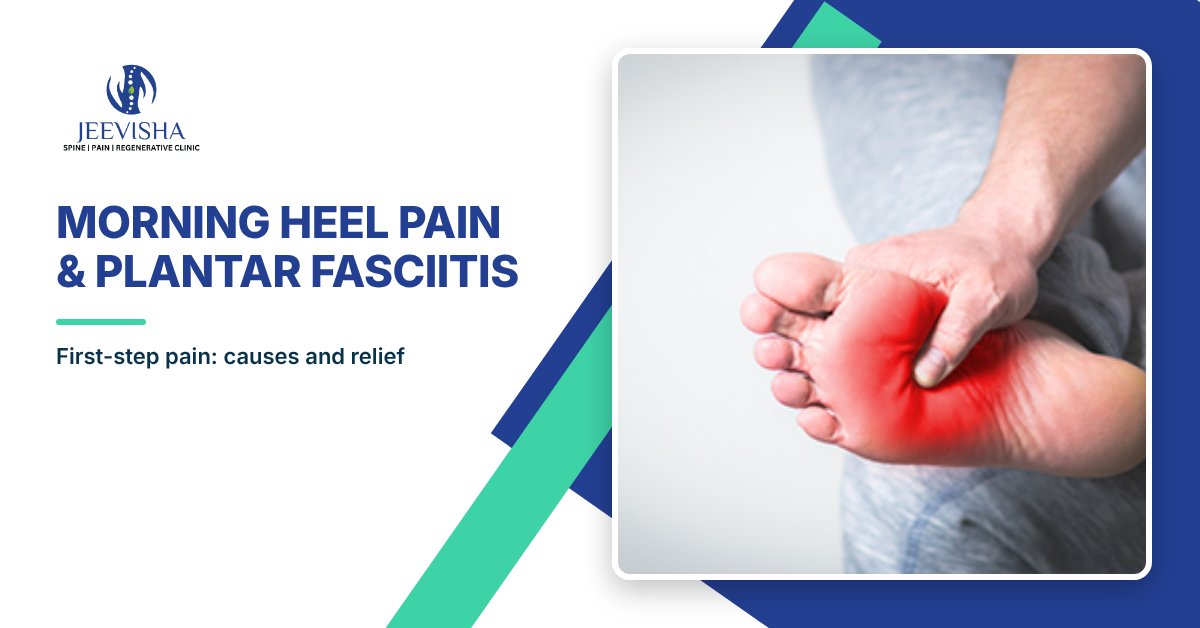
Morning heel pain that is worst with your first steps is often plantar fasciitis, an irritated band of tissue under the foot. It may ease as you move but return after sitting or prolonged standing. Supportive footwear, activity changes, ice and stretching usually help, although recovery can take weeks to months.
If your feet hurt when you wake up and walk, notice exactly where the pain is. Plantar fasciitis usually affects the bottom of the foot near the heel or arch. Pain mainly in the toes, at the back of the heel, or after a clear injury may have a different cause.
This pattern is common in people who stand or walk for long shifts, have recently increased their walking or running, wear flat chappals or sandals, or go barefoot on hard marble or tile floors. A detailed plantar fasciitis assessment can help when the pattern is unclear or is not improving.
Why does heel pain hurt most with the first steps in the morning?
The plantar fascia is a strong band of tissue that runs from the heel towards the toes and helps support the arch. When it has been irritated by repeated strain, it can become stiff while the foot is resting. Overnight, the foot is not taking weight and the tissue can tighten.
Your first step suddenly loads and stretches that sensitive tissue, which is why the pain can feel sharp or stabbing. A similar "first-step" pain may happen when you stand after a long meeting, car ride or period on the sofa. The discomfort often eases after a few minutes of movement, but long standing, walking or running may bring it back.
Pain easing as you warm up does not mean the tissue has recovered. If the same activity repeatedly causes a flare later that day or the next morning, the foot is still being overloaded.
What causes plantar fasciitis?
Plantar fasciitis develops when the fascia is repeatedly stressed or stretched beyond what it can comfortably tolerate. There may not be one single cause. Several small loads can add up:
- Long hours on your feet: shop staff, nurses, teachers, security staff, factory workers and others who stand or walk on hard floors can repeatedly load the heel.
- Barefoot walking on hard floors: marble, granite and tile offer little cushioning, especially when every step at home is unsupported.
- Flat or unsupportive footwear: thin chappals, flip-flops, backless slippers and worn shoes may not give enough cushioning or arch support.
- A sudden activity increase: beginning a daily fitness walk, increasing running distance, adding hills, or returning to sport too quickly can exceed the foot's current capacity.
- Tight calf or heel tissues: limited flexibility can increase strain through the heel and sole during walking.
- Foot shape and walking pattern: flat feet, high arches or an unusual gait can change how pressure is distributed.
- Extra body weight: this can add load to the heel with every step. It is a risk factor, not a reason to blame the person in pain.
Is morning foot pain always plantar fasciitis?
No. First-step pain under the heel and arch strongly suggests plantar fasciitis, but only an examination can confirm the cause. The location, onset and other symptoms help separate it from these possibilities:
- Achilles tendinitis: pain and stiffness are usually at the back of the heel and may extend into the ankle or calf.
- Heel spur: this is a bony growth near the heel. It is not the same as plantar fasciitis, and many heel spurs do not cause pain.
- Stress fracture or other bone injury: pain may involve the bottom, side and back of the heel, particularly after repetitive impact. It needs medical assessment rather than being "walked off".
- Nerve-related pain: burning, shooting pain, tingling, numbness or weakness is less typical of plantar fasciitis and should be checked.
- Heel bursitis: redness, swelling and a dull ache, often at the back of the heel, may point to an irritated bursa.
What if your toes are sore in the morning?
Toe pain is not the usual location for plantar fasciitis. Tight footwear, an ingrown nail, a bunion, an injury, a corn or callus, gout and circulation-related problems can all affect toes. Seek prompt advice if a toe is hot, red and swollen, has changed shape, feels numb, or the pain prevents you from walking.
What should you do the first morning you notice heel pain?
- Do not step straight onto a hard floor. Before standing, gently move the ankle up and down and pull the toes towards you until you feel a comfortable stretch along the sole.
- Put on supportive footwear. Use a well-fitting shoe or supportive house sandal with cushioning and arch support. Avoid walking barefoot on marble or tile.
- Reduce the activity that triggered it. Pause running, jumping, long walks or other aggravating exercise. If you must stand for work, take sitting breaks when possible.
- Use cold safely. Wrap an ice pack or bag of frozen peas in a towel and place it on the painful area for up to 20 minutes every two to three hours. Do not apply ice directly to the skin.
- Start gentle stretching. Stretch the sole of the foot and calf without bouncing or forcing sharp pain. Stop if the exercise makes the pain worse.
- Consider pain relief carefully. If an over-the-counter painkiller is normally safe for you, follow the pack instructions. Ask a pharmacist or doctor if you are unsure, pregnant, have another health condition or take other medicines.
Which stretches may help plantar fasciitis?
For the sole, sit down, cross the sore foot over the other leg and gently draw the toes back until you feel a stretch under the arch. For the calf, face a wall, place the sore side behind you, keep the heel down and lean forward gently. A physiotherapist in Wakad can check technique and adapt exercises to your mobility, work and activity level.
What should you avoid while the heel is painful?
- Walking barefoot on hard floors, even for short trips around the home.
- Thin, flat chappals, flip-flops, backless slippers, tight shoes or worn-out sports shoes.
- Long periods of standing or walking when they clearly worsen the pain.
- Running, jumping or rapidly increasing exercise while first-step pain is still flaring.
- Aggressive stretching, deep pressure or trying to "push through" sharp pain.
How long does plantar fasciitis take to heal?
Recovery is usually gradual. Cleveland Clinic states that the plantar fascia may take anywhere from a few weeks to a few months to heal. That is a range, not a deadline or prediction. How long it takes depends on how irritated the tissue is, how much standing or impact your day requires, and whether the load on the foot is reduced consistently.
It can feel slow because the fascia is used every time you stand or walk. One better day does not mean it is ready for a long shift, a run or a weekend trek. Continuing barefoot walking, wearing unsupportive footwear, or returning suddenly to the activity that caused the pain can trigger another flare.
How can you tell whether it is improving?
- The first few steps are less painful.
- The pain settles sooner after you start moving.
- You can manage a little more normal activity without worse pain later or the next morning.
- Flare-ups are becoming less frequent rather than simply changing from day to day.
If pain has not improved after two weeks of sensible self-care, or improves and repeatedly returns, arrange an assessment. Earlier review is appropriate if it is severe, worsening or affecting normal walking and work.
Heel pain not easing?
Get your foot assessed at Jeevisha Pain Management Center, Kalewadi Phata, Wakad.
What is the best treatment for plantar fasciitis?
There is no single best treatment for every person. The most useful plan usually combines load reduction, supportive footwear, gentle stretching and a gradual return to activity. The treatment should match the diagnosis, the demands of your job and the activities you want to resume.
What can a clinician or physiotherapist do?
A clinician can examine where the foot is tender, how the ankle and toes move, and whether another condition is more likely. Scans are not always needed, but may be considered if the history or examination suggests another cause.
Professional care may include an individual exercise plan, activity guidance, footwear advice, insoles or heel pads, taping, or a night splint. More persistent cases may need discussion of other specialist treatments. These options are not suitable for everyone, and procedures or surgery are not the usual first step.
Jeevisha Pain Management Center lists plantar fasciitis treatment among its services and has an in-house physiotherapy team. An assessment can clarify whether the pain fits plantar fasciitis and which conservative steps are appropriate; it does not mean every patient needs the same protocol.
When should you see a doctor for heel or foot pain?
Arrange a routine consultation if the pain is severe, worsening, keeps returning, stops normal activities, or has not improved after two weeks of self-care. Also seek medical advice if you have diabetes and foot pain, because foot problems may need earlier attention.
Seek urgent medical care if:
- severe heel pain started after an injury;
- you heard a snap, pop or grinding sound;
- you cannot bear weight or walk;
- the foot or ankle has changed shape or sits at an unusual angle;
- there is major swelling or bruising around the calf and ankle;
- the foot is red, hot or increasingly swollen, especially with fever or feeling unwell; or
- you have tingling, numbness or weakness in the foot.
What should you track before the appointment?
Write down the exact pain location, whether it is worst on the first steps, how long it takes to ease, and what makes it return. Note recent changes in walking or running, time spent standing, usual footwear, barefoot time at home, swelling, numbness, injury, and what self-care you tried. This makes the assessment more useful.
If you are unsure whether ongoing pain needs review, the general decision points in this guide are simple: worsening function, repeated recurrence or failure to improve deserve assessment. You can review Dr. Sanjog Mekewar's qualifications before booking.
How can you prevent morning heel pain from coming back?
- Keep supportive indoor footwear near the bed if your home has hard tile or marble floors.
- Choose well-fitting shoes with cushioning and arch support; replace them when the sole or support is worn.
- Increase walking or running gradually instead of changing distance, speed and hills at the same time.
- Warm up before exercise and keep calf and sole stretches in your routine.
- Use recovery days after harder activity and reduce the load if the next morning is clearly worse.
- If body weight is adding strain and you want support with it, discuss a realistic plan with a healthcare professional.
- For standing jobs, change position and take sitting breaks when possible rather than staying fixed on a hard floor all day.
Frequently Asked Questions
Why does my heel hurt most when I take my first steps in the morning?
Plantar fasciitis pain is often strongest on the first steps because the irritated plantar fascia has rested and tightened overnight. Standing suddenly stretches and loads it. The pain may ease after a few minutes of movement, but it can return after prolonged standing, walking or sitting. This pattern is suggestive, not a diagnosis by itself.
Why does the bottom of my foot hurt when I wake up?
Pain under the heel or arch that is worse when you first stand commonly fits plantar fasciitis. Other causes of bottom-of-foot pain include a sprain, nerve irritation, corns, calluses, flat feet or a stress injury. Note the exact location and whether there is swelling, numbness or a recent activity change, then seek assessment if it persists.
Can walking barefoot at home cause heel pain?
Walking barefoot on hard marble, granite or tile can repeatedly load the heel without cushioning or arch support. It may contribute to plantar fasciitis, especially when combined with long standing, unsupportive footwear or a sudden increase in activity. Supportive indoor footwear may help, but a clinician should assess pain that is severe, worsening or not improving.
Why is my plantar fasciitis taking so long to heal?
The plantar fascia is loaded whenever you stand or walk, so it is difficult to rest completely. Long shifts, repeated barefoot walking, flat chappals and returning to running too quickly can keep irritating it. Progress is often gradual rather than linear. Look for less first-step pain and fewer flare-ups, not an instant change from painful to fully recovered.
How long does plantar fasciitis take to heal?
Cleveland Clinic gives a broad recovery range of a few weeks to a few months. Your timeline can be shorter or longer depending on symptom severity, daily standing or walking, footwear, activity changes and how consistently the foot is protected. If sensible self-care has not helped after two weeks, or pain is worsening, arrange a medical assessment.
What is the best treatment for plantar fasciitis?
No single option is best for everyone. Most plans begin with reducing aggravating activity, wearing supportive cushioned footwear, avoiding barefoot walking on hard floors, icing and gentle calf and sole stretches. A clinician or physiotherapist can check the diagnosis and add tailored exercises, insoles, taping or another supportive device when appropriate.
Is plantar fasciitis the same as a heel spur?
No. Plantar fasciitis is irritation of the thick band of tissue under the foot. A heel spur is a bony growth near the heel. They can occur together, but many heel spurs do not cause pain. Finding a spur does not automatically explain the symptoms, so treatment should be based on the full examination rather than an image alone.
Why are my toes sore in the morning?
Toe pain is not a typical plantar fasciitis symptom. Possible causes include tight shoes, an ingrown nail, a bunion, corns, calluses, an injury, gout or circulation-related problems. Seek prompt medical advice if a toe is hot, red and swollen, numb, misshapen, or so painful that you cannot walk normally.
Where can you get help for persistent heel pain in Pune?
If heel or foot pain is not improving, Jeevisha Pain Management Center offers assessment for plantar fasciitis and access to its in-house physiotherapy team. Dr. Sanjog Mekewar is an Interventional Pain Management specialist. The clinic is at Shop No. 214, Solitaire Business Hub, Kalewadi Phata, Wakad, Pune 411057.
Hours are Monday to Saturday, 10:00 AM to 8:00 PM; Sunday closed. Phone or WhatsApp: +91 91191 11837. The clinic is convenient for people in Wakad, Hinjewadi and nearby Pimpri-Chinchwad who need a clearer diagnosis and a practical plan for persistent first-step pain.
Book a heel pain consultation
Jeevisha Pain Management Center, Shop No. 214, Solitaire Business Hub, Kalewadi Phata, Wakad, Pune 411057. Open Monday to Saturday, 10:00 AM to 8:00 PM.
Sources
- NHS. Plantar fasciitis. Last reviewed February 2025.
- NHS. Heel pain. Last reviewed October 2025.
- NHS. Toe pain. Last reviewed November 2025.
- Cleveland Clinic. Plantar Fasciitis: Symptoms, Causes & Treatment Options.
- Cleveland Clinic. Heel Pain: Causes, Diagnosis & Treatment.
- Cambridge University Hospitals NHS Foundation Trust. Plantar fasciitis.
This article is for general information and does not replace a medical consultation. Please see a doctor for advice about your own symptoms.