Shoulder pain is one of those frustrating issues that can affect anyone whether you’re an athlete, a desk worker, or simply going about your daily life. It can make simple activities like lifting a cup, driving, typing, or reaching for a shelf uncomfortable or even painful. And what’s worse? Shoulder pain can come on gradually, so sometimes you don’t even know what caused it.
If you’ve ever asked yourself, “Why does my shoulder hurt?” - you’re not alone. Shoulder pain is extremely common, and knowing what’s behind it is the first step toward relief and preventing long-term damage.
At Jeevisha Spine Pain Regenerative Clinic, we often see patients struggling with persistent shoulder discomfort. Dr. Sanjog Mekewar, a leading specialist in musculoskeletal and spine care, provides expert diagnosis and personalized treatment plans to help patients recover faster and safely.
Understanding Shoulder Pain: A Quick Overview
The shoulder is one of the most flexible and complex joints in the human body. It consists of:
- Bones (humerus, scapula, clavicle)
- Muscles (including the rotator cuff group)
- Tendons
- Ligaments
This structure gives the shoulder an incredible range of motion, allowing you to lift, rotate, and reach in almost any direction. But that flexibility comes at a price, vulnerability to injuries and chronic wear-and-tear.
Shoulder pain can be caused by:
- Injuries (like tears or dislocations)
- Overuse or repetitive motion (common in sports and certain jobs)
- Inflammation (like bursitis or tendinitis)
- Age-related changes (arthritis, degeneration)
- Referred pain from the neck or spine
Common symptoms of shoulder pain include:
- Persistent aching or sharp pain in the joint
- Limited range of motion or stiffness
- Weakness or difficulty lifting objects
- Pain at night, sometimes disturbing sleep
- Swelling, redness, or warmth in the joint
Recognizing these signs early can help you take action before the pain worsens or becomes chronic.
The Most Common Reason for Shoulder Pain: Rotator Cuff Injury
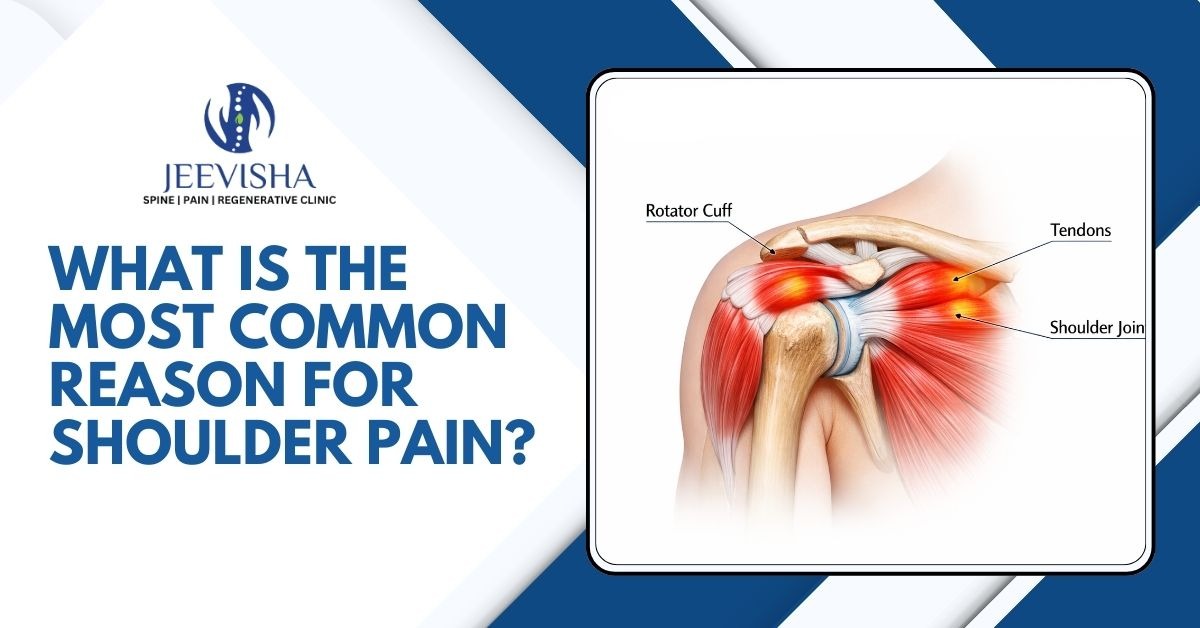
The single most common reason for shoulder pain is a rotator cuff injury. The rotator cuff is a group of four muscles and their tendons that stabilize the shoulder joint and allow you to lift and rotate your arm.
Why Rotator Cuff Injuries Are So Common
- Repetitive overhead movements: Activities like swimming, tennis, painting, or even working on a construction site can strain the tendons over time.
- Aging: Tendons weaken and become less flexible with age, increasing the risk of tears.
- Poor posture: Hunched shoulders or forward head posture can compress the rotator cuff tendons.
- Sudden injuries: Falls, lifting heavy objects incorrectly, or accidents can cause acute tears.
Symptoms of a rotator cuff injury include:
- Pain when lifting your arm or performing overhead activities
- Weakness in the shoulder or arm
- Clicking, popping, or grinding sounds during movement
- Night pain that worsens when lying on the affected side
Rotator cuff injuries can range from mild inflammation (tendinitis) to partial or complete tears. Fortunately, most cases respond well to rest, physical therapy, and targeted exercises, though severe tears may require surgical intervention.
Other Common Causes of Shoulder Pain
While rotator cuff injuries lead the pack, several other conditions frequently contribute to shoulder pain:
1. Shoulder Impingement Syndrome
Shoulder impingement occurs when the tendons of the rotator cuff get pinched between the bones of the shoulder during movement.
Symptoms include:
- Pain when lifting the arm overhead or behind the back
- Discomfort that worsens with repetitive activity
- Mild swelling or tenderness
Impingement is common in athletes who throw, swim, or play racquet sports, as well as people whose work requires frequent overhead lifting
2. Frozen Shoulder (Adhesive Capsulitis)
Frozen shoulder develops gradually, usually over weeks or months, causing stiffness and limited motion.
Risk factors:
- Age over 40
- Diabetes
- Recovery from shoulder injury or surgery
People with frozen shoulders often notice difficulty reaching behind their back or raising their arm, and everyday tasks like dressing or grooming become challenging.
3. Shoulder Bursitis
Bursitis is inflammation of the bursae, small fluid-filled sacs that cushion the shoulder joint.
Symptoms include:
- Localized pain and tenderness
- Swelling
- Pain that worsens at night or with repetitive motion
Bursitis often occurs due to overuse, especially from repetitive overhead movements or heavy lifting.
4. Shoulder Arthritis
Arthritis in the shoulder joint can be age-related (osteoarthritis) or caused by autoimmune conditions.
Symptoms include:
- Chronic pain and stiffness
- Reduced range of motion
- Grinding or clicking during movement
Shoulder arthritis typically develops gradually and may affect daily activities like reaching overhead, dressing, or lifting objects.
5. Nerve-Related Shoulder Pain
Sometimes shoulder pain originates from nerve compression in the neck or cervical spine.
This can cause:
- Radiating pain down the arm
- Numbness or tingling
- Weakness in the arm or hand
Pinched nerves, herniated discs, or spinal stenosis can all refer to pain in the shoulder.
Common Shoulder Pain Symptoms & Warning Signs
Recognizing your symptoms helps determine whether your shoulder pain is minor or requires medical attention. Common signs include:
- Pain when lifting or rotating your arm
- Night-time shoulder pain disrupting sleep
- Weakness or reduced range of motion
- Swelling, redness, or visible deformity (seek immediate care)
Red flags that require prompt attention:
- Sudden, severe pain after an injury
- Inability to move the shoulder or arm
- Signs of infection (fever, warmth, redness)
- Persistent weakness or numbness
How to Tell What’s Causing Your Shoulder Pain
While self-assessment can help, it’s often difficult to identify the exact cause of shoulder pain. Here’s a simple guide:
- Rotator cuff injury: Pain when lifting overhead, weakness, popping/clicking sounds
- Frozen shoulder: Gradual stiffness, reduced motion in all directions
- Bursitis: Localized tenderness, swelling, pain with repetitive motion
- Arthritis: Chronic pain, stiffness, grinding sensation
- Nerve-related pain: Radiating pain, tingling, numbness
Professional evaluation by a doctor or physiotherapist is the best way to determine the cause and plan proper treatment. Clinics like Jeevisha Spine Pain Regenerative Clinic combine expert diagnosis with personalized therapy plans for faster and safer recovery.
Treatment Options for Shoulder Pain
1. Home Care & Early Relief
For mild shoulder pain, you can try:
- Rest and avoiding movements that worsen pain
- Ice or heat therapy to reduce inflammation and relax muscles
- Gentle mobility exercises to maintain flexibility
- Posture correction and ergonomic adjustments at work
These measures often help relieve discomfort and prevent further injury.
2. Medical & Professional Treatments
If home care is not enough, medical treatment may include:
- Physical therapy: Exercises to strengthen muscles and restore mobility
- Medications: Anti-inflammatory drugs to reduce pain and swelling
- Injections: Cortisone or platelet-rich plasma (PRP) injections for persistent inflammation
- Surgery: For severe rotator cuff tears, advanced arthritis, or dislocations
For patients seeking shoulder pain treatment in Wakad PCMC, Dr. Sanjog Mekewar offers a comprehensive, step-by-step approach focused not just on pain relief but on restoring long-term mobility and preventing future injuries.
When Should You See a Doctor for Shoulder Pain?
Seek professional help if:
- Pain persists for more than a few weeks
- Pain is severe or sudden after an injury
- You experience weakness, numbness, or limited movement
- Home remedies fail to provide relief
Early evaluation ensures the underlying issue is treated correctly and prevents long-term complications.
How to Prevent Shoulder Pain in Daily Life
Prevention is often easier than cure. Some tips include:
- Maintain good posture, especially when sitting at a desk
- Avoid repetitive overhead movements without breaks
- Strengthen shoulder muscles with regular exercises
- Warm up properly before sports or heavy lifting
- Use proper lifting techniques during workouts and daily activities
With consistent care, you can reduce the risk of recurring pain and injuries. Regular check-ups at Jeevisha Spine Pain Regenerative Clinic can help ensure your shoulders stay strong and healthy..
Don’t Ignore Shoulder Pain
Shoulder pain is common, but it doesn’t have to control your life. The most frequent culprit rotator cuff injury can often be managed effectively with early care, targeted exercises, and professional guidance.
If you’re struggling with persistent shoulder pain, consult a healthcare provider. Early attention can restore comfort, mobility, and strength, letting you get back to your daily activities without limitations. Clinics like Jeevisha Spine Pain Regenerative Clinic offer comprehensive care, combining expert diagnosis with advanced treatment techniques for better long-term results.