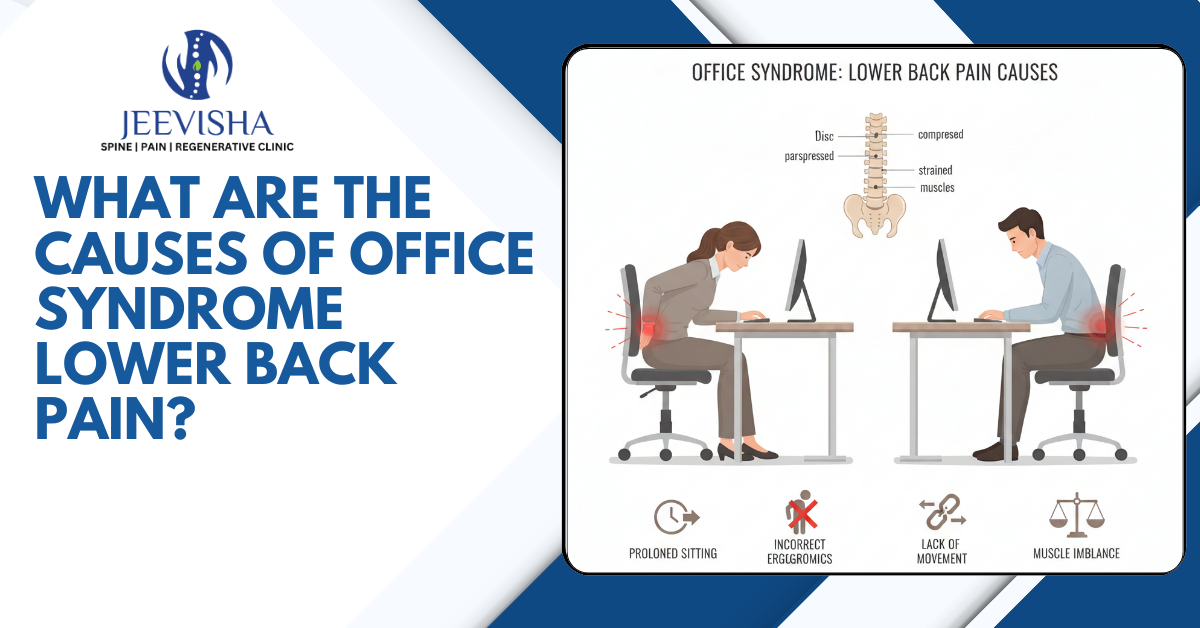
If you work long hours at a desk, you’ve probably felt that familiar dull ache in your lower back—the one that seems to show up right when you're trying to focus. This isn’t just “normal work pain.” According to Dr. Sanjog Mekewar, a leading spine specialist at Jeevisha Spine Pain Regenerative Clinic, in many cases, this discomfort is part of what is commonly called office syndrome, a growing problem among office workers, freelancers, remote workers, and even students.
Lower back pain is one of the most common symptoms of office syndrome, and the causes are often hidden in your daily habits. Dr. Sanjog Mekewar emphasizes that understanding these causes is the first step toward prevention and long-term spinal health. Let’s break it down in a simple, relatable way so you can understand why it happens—and what you can do about it.
What Is Office Syndrome?
Office syndrome refers to a group of symptoms that affect people who spend long hours doing repetitive tasks—usually sitting at a desk, typing, or staring at a screen.
It’s not a single medical condition. Instead, it’s a combination of muscle pain, stiffness, numbness, and poor posture-related discomfort, mostly affecting:
- Lower back
- Neck
- Shoulders
- Wrists
- Eyes
And among all these, lower back pain tops the list.
Who Gets Office Syndrome?
Anyone who sits for 6–10 hours a day or does repetitive desk tasks is at risk:
- Office employees
- Remote workers
- IT professionals
- Students
- Designers
- Call-center workers
If your day revolves around a chair and a screen, you’re already in the risk group.
Why Does Office Syndrome Cause Lower Back Pain?
Let’s look at the main reasons your lower back becomes a victim of your desk job.
1. Prolonged Sitting
Your spine isn’t designed to stay seated for hours. When you sit for too long:
- Your lumbar spine becomes compressed
- Blood flow reduces
- Muscles stiffen
- Your joints become less flexible
Over time, this leads to consistent lower back pain that worsens at the end of the day.
2. Poor Posture
Think about how you sit right now. Are you slouching? Leaning forward? Shoulders rounding?
Poor posture is one of the biggest triggers of office syndrome lower back pain. Bad posture forces your spine into unnatural positions, placing extra strain on your lower back muscles.
Common posture mistakes:
- Sitting too far from the screen
- Hunching over the keyboard
- Leaning on one side
- Sitting cross-legged for hours
3. Incorrect Desk Ergonomics
Ergonomics simply means setting up your workspace in a way that supports your body instead of hurting it.
Bad desk ergonomics include:
- A chair that’s too high or low
- A desk that doesn’t support forearms
- A monitor placed too low
- A non-supportive chair without lumbar support
If your workstation isn't aligned with your natural body posture, your back pays the price.
4. Weak Core Muscles
Your core acts like the foundation of your body. When it’s weak:
- Your spine loses stability
- Your lower back muscles have to work extra hard
- This causes fatigue, stiffness, and long-term pain
Sitting for hours weakens the core muscles even more, creating a cycle of strain and discomfort.
5. Lack of Movement
Even if you sit “correctly,” staying in one position for too long is harmful. Muscles tighten, joints lock up, and circulation decreases—all leading to lower back pain. That’s why even a quick 2-minute stretch makes a big difference.
6. Using the Wrong Chair
A soft couch-like chair may feel comfortable at first, but it often lacks proper lumbar support. Without that support, your spine slouches, adding pressure to the lower back.
A poorly designed chair can cause:
- Slumping
- Forward head posture
- Rounded shoulders
- Lower back strain
Risk Factors That Make Lower Back Pain Worse
Certain habits and conditions increase the chances of developing office syndrome lower back pain:
- Working long hours without breaks
- Stress (tightens muscles)
- Lack of exercise
- Awkward twisting when reaching for items
- Obesity
- Poor sleeping posture
- Using laptops without a stand
These risk factors compound day after day, turning minor discomfort into chronic pain.
Symptoms You Shouldn’t Ignore
Lower back pain isn’t always “harmless.” Look out for these signs:
- Pain that increases as the day progresses
- Stiffness when getting up after sitting
- Sharp pain when standing or bending
- Pain spreading to hips or thighs
- Numbness or tingling sensation
- Sudden back spasms
If these symptoms persist for more than 2–3 weeks, it’s time to take action.
How to Prevent Office Syndrome Lower Back Pain
Good news: most causes are fixable with daily adjustments. Let’s walk through practical, easy-to-follow solutions.
1. Improve Your Desk Ergonomics
A healthy workspace should support your natural posture.
Checklist:
- Your feet should rest flat on the floor
- Knees at a 90-degree angle
- Monitor at eye level
- Chair with proper lumbar support
- Forearms parallel to the desk
Small adjustments can make a huge difference in long-term back health.
2. Adopt a Healthy Sitting Posture
The ideal sitting posture includes:
- Straight spine
- Shoulders relaxed
- Hips slightly above knee level
- Both feet flat
- Head aligned with shoulders
If you tend to slouch, consider using a lumbar cushion.
3. Take Frequent Breaks
Every 45–60 minutes:
- Stand up
- Walk for 2 minutes
- Stretch your lower back
Motion refreshes your spine and boosts blood flow.
4. Stretch and Strengthen Daily
Simple exercises you can do at home or office:
- Cat-cow stretch
- Hip flexor stretch
- Back extension stretch
- Hamstring stretch
- Planks
- Bridges
- Bird-dog exercise
Just 10 minutes a day can dramatically reduce back pain.
5. Use Ergonomic Tools
Consider investing in:
- Ergonomic chair
- Laptop stand
- Footrest
- Lumbar support pillow
- Standing desk
These tools help your body maintain healthy posture naturally.
6. When Should You See a Doctor?
Seek medical advice if:
- Pain lasts longer than 3 weeks
- You feel numbness or tingling
- Pain shoots down your leg
- Pain worsens even with posture correction
- You experience weakness in the legs
Persistent symptoms could indicate nerve compression or other musculoskeletal issues requiring professional care.
Final Thoughts
Office syndrome lower back pain is extremely common but it’s not something you should ignore or learn to “live with.” Most of the causes come from everyday habits like poor posture, prolonged sitting, and bad ergonomics.
The good news? With small but consistent adjustments to your workspace, posture, movement routine, and lifestyle, you can significantly reduce and even eliminate lower back pain.
Your body is designed to move. When you respect that, your spine will start to support you the way it should. If you’re looking for professional guidance, consider consulting the pain management in Wakad Pimpri Chinchwad at Jeevisha Spine Pain Regenerative Clinic—our team, led by Dr. Sanjog Mekewar, can help you create a personalized plan to relieve back pain and improve your overall spinal health.