In today’s fast-paced world, stress and anxiety have quietly become part of daily life. Work pressure, family responsibilities, financial worries, and health concerns often pile up and while we may try to ignore them mentally, the body rarely does.
Many people are surprised when emotional stress starts showing up as back pain, neck stiffness, headaches, joint pain, or unexplained body aches. If you’ve noticed your pain worsening during stressful periods, you’re not imagining it. Stress and anxiety can genuinely intensify physical pain, and this connection is well recognised in modern pain science.
When Emotional Stress Starts Affecting the Body
Stress is meant to be temporary. It helps us respond to challenges. But when stress becomes chronic, the body stays in a constant state of alert. This ongoing tension can gradually affect muscles, nerves, and even internal organs.
People dealing with long-term stress often experience:
- Persistent muscle tightness
- Increased inflammation
- Fatigue and poor sleep
- Heightened pain sensitivity
At Jeevisha Spine Pain Regenerative Clinic, many patients report that their pain worsens during emotionally demanding phases of life even when scans or reports show no major structural damage. This highlights how closely the mind and body are connected.
Understanding the Mind–Body Connection in Pain
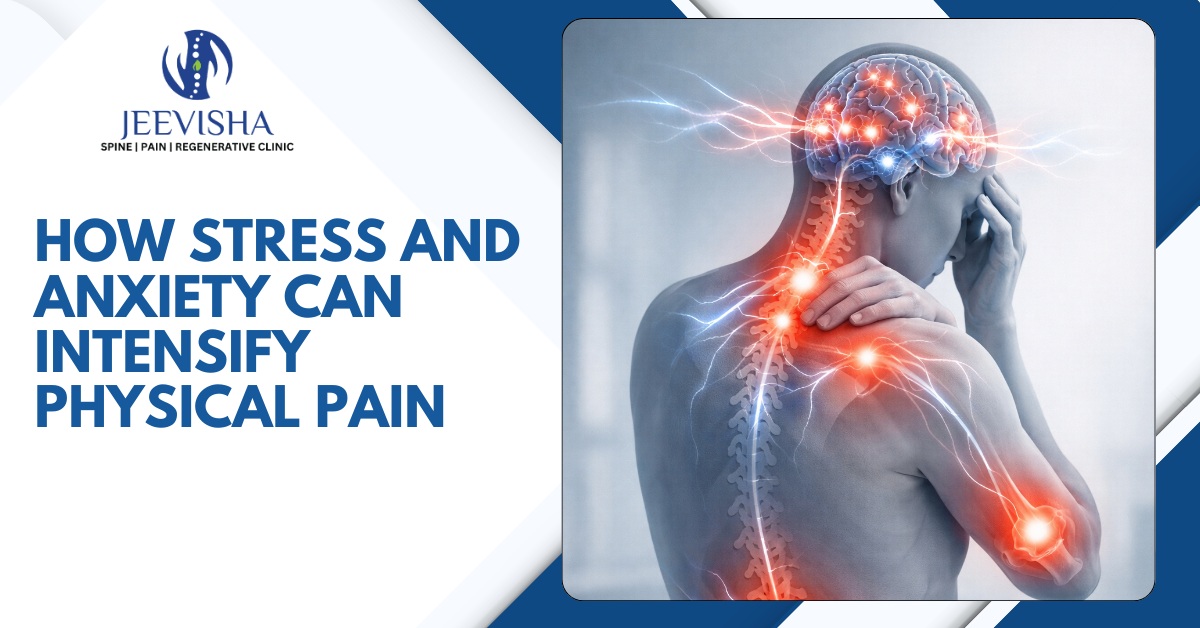
The brain plays a central role in how pain is experienced. Emotional stress doesn’t just stay in the mind—it alters how pain signals are processed.
When stress or anxiety is present:
- The brain becomes more reactive to pain signals
- Normal sensations can feel uncomfortable or alarming
- Recovery from pain becomes slower
This explains psychosomatic pain, where emotional stress leads to very real physical discomfort. Importantly, this pain is not imagined; it involves real neurological and hormonal changes.
How Stress Triggers Physical Pain
Stress Hormones and Pain Sensitivity
When stressed, the body releases hormones such as cortisol and adrenaline. While helpful in emergencies, long-term elevation of these hormones can:
- Increase inflammation
- Sensitize nerves
- Lower pain tolerance
This means pain feels stronger and lasts longer than it normally would.
Muscle Tension and Stress-Induced Pain
Stress often causes unconscious muscle tightening especially in the neck, shoulders, jaw, and lower back. Over time, this tension leads to:
- Chronic stiffness
- Reduced mobility
- Persistent aches
According to Dr. Sanjog Mekewar, pain often improves when both physical treatment and stress regulation are addressed together, rather than focusing only on the painful area.
How Anxiety Makes Pain Feel Worse
Anxiety and the Nervous System
Anxiety keeps the nervous system stuck in “fight-or-flight” mode. In this state:
- Pain signals are amplified
- The body struggles to relax
- Sensations feel more intense
This is why anxiety can make even mild pain feel overwhelming.
Hyperawareness and Pain Focus
Anxiety also increases awareness of bodily sensations. The more attention pain receives, the stronger it feels creating a loop where anxiety fuels pain and pain fuels anxiety.
Common Types of Stress and Anxiety-Related Pain
Stress and anxiety can affect the entire body, commonly causing:
- Headaches and migraines
- Neck, shoulder, and back pain
- Chest tightness
- Digestive discomfort
- General body aches without injury
These symptoms are frequently seen in patients seeking non-surgical, holistic pain care at Jeevisha Spine Pain Regenerative Clinic, where both physical and emotional contributors are evaluated.
The Stress–Pain Cycle
Stress and pain reinforce each other:
- Stress triggers pain
- Pain increases worry and fear
- Anxiety heightens pain sensitivity
- Pain becomes persistent
Without intervention, this cycle can contribute to chronic pain conditions, even in the absence of severe physical damage.
Why Stress Makes Pain Worse: A Simple Explanation
From a scientific perspective, stress:
- Alters pain pathways in the brain
- Reduces natural pain-relief chemicals
- Disrupts sleep and healing
In simple terms, stress turns up the “volume” on pain signals, making the body more sensitive and less resilient.
Signs Your Pain May Be Stress or Anxiety-Related
Your pain may be linked to stress if:
- It worsens during emotional pressure
- Medical tests don’t explain the severity
- It improves with relaxation or rest
- It fluctuates with mood changes
Recognizing this connection allows for more effective, whole-person pain management.
Ways to Reduce Stress-Induced Physical Pain
Calming the Nervous System
- Deep breathing
- Progressive muscle relaxation
- Mindfulness practices
These techniques signal safety to the brain and reduce pain amplification.
Addressing Anxiety Alongside Pain
Managing anxiety through therapy, stress awareness, or guided relaxation can significantly reduce pain intensity. Many patients notice improvement when emotional triggers are addressed alongside physical treatment.
Supportive Lifestyle Habits
- Consistent sleep
- Gentle movement
- Balanced nutrition
- Reduced stimulants
These habits strengthen the body’s ability to heal.
When to Seek Professional Help
Pain should never be ignored if it:
- Is severe or worsening
- Limits daily activity
- Comes with new symptoms
An integrated approach combining medical evaluation with stress and anxiety management often delivers the best results.
Healing the Mind Helps Heal the Body
Stress and anxiety don’t just affect mental health—they directly influence how the body experiences pain. When emotional factors are addressed alongside physical care, recovery becomes more effective and sustainable.
As emphasized by Dr. Sanjog Mekewar, understanding and treating the mind–body connection is key to long-term pain relief. When the nervous system calms, the body finally gets the opportunity to heal.