Staying active is essential for your physical and mental well-being. But even with the best efforts, sports injuries are common—affecting beginners, fitness lovers, and professional athletes alike.
At Jeevisha Spine Pain Regenerative Clinic, we see athletes daily who suffer from preventable sports injuries. And the question they often ask is:
“What is the most common type of sports injury?”
The answer is simple: sprains and strains. These injuries remain the leading cause of pain and mobility issues among athletes. This detailed guide (created with insights inspired by sports rehabilitation experts at Jeevisha Spine Pain Regenerative Clinic) explains everything you need to know—from causes to prevention.
What is the Most Common Type of Sports Injury?
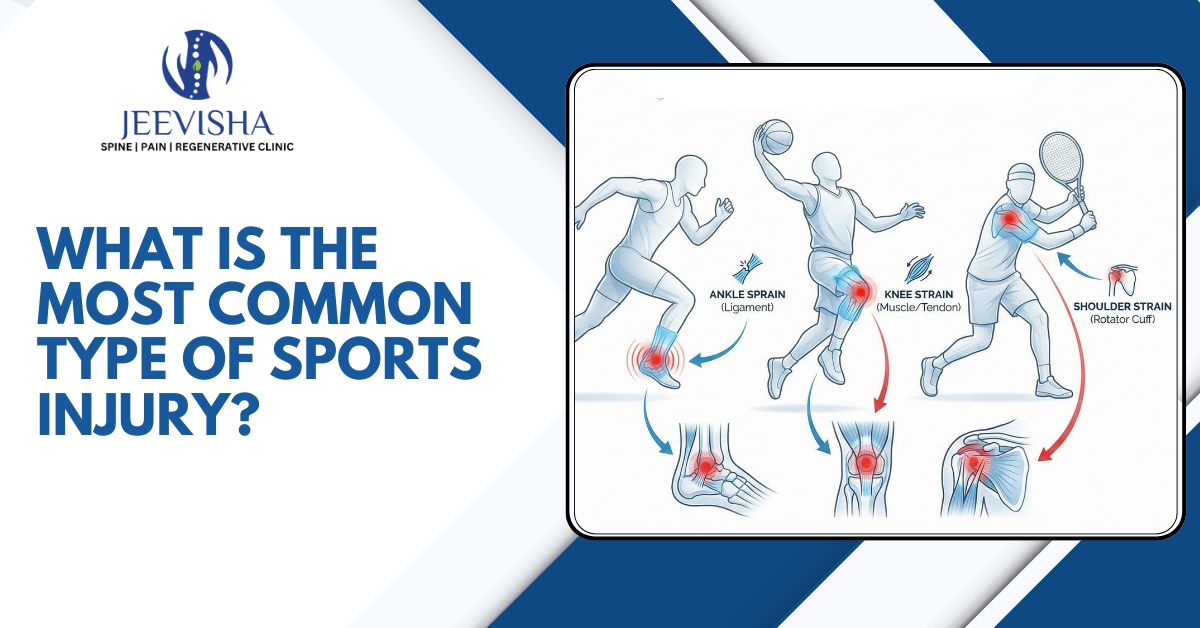
The most common sports injuries are sprains and strains, affecting muscles, ligaments, and tendons.
What is a Sprain?
A sprain happens when the ligaments (the tissues connecting two bones) are overstretched or torn.
Common areas: ankle, wrist, knee.
What is a Strain?
A strain is an overstretching or tearing of muscles or tendons (the tissues that connect muscles to bones).
Common areas: hamstring, back, calf.
Because these tissues support almost every movement you make, sprains and strains occur across all sports, fitness levels, and age groups—making them the most frequent sports injuries.
Why Sprains & Strains Are So Common in Athletes
Sprains and strains occur during activities that involve running, jumping, sudden stops, twisting, sprinting, or lifting—basically, actions involved in most sports.
Let’s look at the reasons they happen so often:
- 1. High-Impact, Fast-Movement Sports: Sports like football, basketball, tennis, and badminton involve quick direction changes. This places sudden pressure on ligaments, causing ankle, knee, and wrist injuries.
- 2. Overuse of Muscles: Cyclists, runners, and gym-goers often push muscles too hard, leading to overuse injuries such as tendonitis and muscle strains.
- 3. Poor Warm-Up or No Warm-Up: Cold muscles lack flexibility. A good warm-up improves blood flow and reduces stiffness.
- 4. Weak Muscles or Imbalance: If your thigh is stronger than your hamstring, or your back is weaker than your core, the weaker muscle becomes more injury-prone.
- 5. Incorrect Technique: Poor posture during workouts, improper lifting form, or incorrect running mechanics increase injury risk.
Because these factors are so common, sprains and strains become the leading sports injuries for athletes of all levels.
Symptoms of the Most Common Sports Injuries
- 1. Pain Around the Affected Area: Pain is usually the first sign of a sprain or strain. It may start suddenly after a twist, stretch, or impact, and often worsens with movement. Mild cases cause discomfort, while severe injuries can make it difficult to walk, run, or continue any physical activity.
- 2. Swelling and Inflammation: Swelling develops when soft tissues become irritated or injured. It usually appears within minutes to hours and may be accompanied by warmth or redness. Swelling also restricts movement and indicates that the body is responding to tissue damage and beginning the natural healing process.
- 3. Muscle Weakness or Instability: In strains, the injured muscle may feel weak or unable to handle pressure. In sprains, the affected joint—like the ankle or knee—may feel unstable or wobbly. This happens because the supporting tissues are overstretched or partially torn, reducing their normal strength and stability.
- 4. Limited Range of Motion: Sprains and strains often make it difficult to move the joint or muscle fully. Bending, stretching, or rotating may feel painful or tight. The body restricts movement to protect the injured tissues, which is why stiffness is common in the first few days after injury.
- 5. Bruising or Discoloration: Bruising appears when tiny blood vessels under the skin break during an injury. It may start as redness and gradually turn blue, purple, or yellow. While bruising can look alarming, it’s a normal sign of sprains or strains and indicates tissue irritation or mild internal bleeding.
What Causes the Most Common Sports Injury?
- 1. Overuse or Repetitive Stress: Overuse happens when a muscle or joint is pushed beyond its capacity repeatedly without enough rest. This constant stress weakens tissues over time, making them more prone to sprains and strains. Athletes who train daily or increase intensity too quickly often experience this type of injury.
- 2. Poor Warm-Up or Lack of Stretching: Skipping warm-ups reduces blood flow and flexibility, leaving muscles tight and more vulnerable to sudden pulls or tears. Without proper stretching, joints don’t achieve full range of motion, increasing the risk of strains during quick movements, jumps, or changes in direction during any sport.
- 3. Incorrect Technique or Form: Using the wrong posture or movement pattern puts unnecessary pressure on muscles and ligaments. Whether lifting weights incorrectly or running with poor alignment, faulty technique creates imbalances that lead to sprains and strains. Over time, the body compensates, making injuries more likely and recovery slower.
- 4. Sudden Impact or Unexpected Movement: Quick twists, falls, or collisions can stretch tissues beyond their limits, causing immediate injury. Sudden directional changes in sports like football, basketball, or cricket often strain muscles and ligaments. These unexpected forces overload the body, leading to instant sprains or painful muscle pulls.
Treatment for the Most Common Sports Injuries
- 1. R.I.C.E. (Rest, Ice, Compression, Elevation): The R.I.C.E. method helps reduce pain and swelling in the early stage of injury. Rest the affected area, apply ice packs, use compression bandages, and elevate the limb to control inflammation and speed up initial healing.
- 2. P.O.L.I.C.E. (Protect, Optimal Loading, Ice, Compression, Elevation): P.O.L.I.C.E. focuses on protecting the injured area while gradually reintroducing movement. This approach prevents stiffness, improves circulation, and helps tissues recover faster. It’s a modern upgrade over R.I.C.E. for safe, controlled healing.
- 3. Physiotherapy & Rehabilitation: Physical therapy helps restore strength, flexibility, and movement after a sports injury. Guided exercises, stretching routines, and manual therapy support proper healing and prevent reinjury. It's one of the most essential steps for long-term recovery.
- 4. Anti-Inflammatory Medication: Anti-inflammatory medicines, such as NSAIDs, reduce pain, swelling, and stiffness after an injury. They offer short-term relief and help you stay comfortable during recovery. Always use them under guidance to avoid side effects.
- 5. Advanced Regenerative Therapies: Regenerative treatments focus on repairing damaged tissues naturally, improving healing, and reducing chronic pain. These therapies help athletes recover faster, especially from recurring injuries. They’re ideal for supporting long-term joint and muscle health.
- 6. Bracing, Taping & Support: Braces and athletic taping stabilize the injured area, reduce stress on tissues, and support safe movement. They help prevent further damage during recovery and are commonly used in sports for protection and added confidence.
Most Common Sports Injuries by Sport
Each sport has unique movements that increase the risk of specific injuries. Here’s a breakdown:
- Football: Ankle sprains, Hamstring strains, Knee ligament injuries (ACL/MCL)
- Basketball: Ankle sprains, Wrist injuries, Achilles tendonitis
- Running: Shin splints, Muscle strains, Stress fractures
- Cricket: Shoulder strain, Back strain, Finger injuries
Despite these differences, sprains and strains remain the top injuries across most sports because they involve repetitive motion, sudden stops, and explosive movements.
Conclusion
So, what is the most common type of sports injury? The answer remains clear: sprains and strains. They’re common because every sport—whether running, football, cricket, or gym workouts—places repeated stress on your muscles and joints. But with the correct technique, proper warm-ups, and consistent strength training, you can significantly lower your risk of injury.
Whether you're a professional athlete or someone who simply enjoys staying active, understanding sports injuries helps you move safely, recover smarter, and perform better.
If you’re dealing with pain, recurring injuries, or movement restrictions, the experts at Jeevisha Spine Pain Regenerative Clinic are here to support your recovery. As a trusted Sports Injury Specialist in Wakad Pimpri Chinchwad, Our team provides advanced, evidence-based treatment to help you heal faster and return to your active lifestyle with confidence.
Take the first step toward pain-free movement—book your consultation with Jeevisha Spine Pain Regenerative Clinic today.