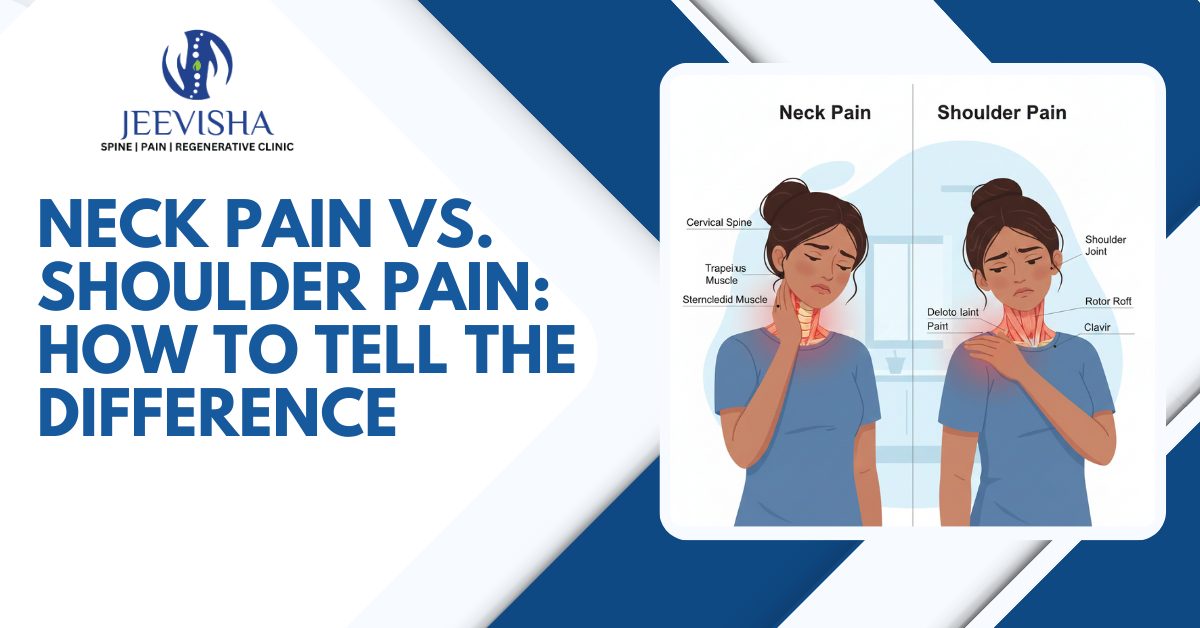
If you've ever felt a nagging ache around your neck or shoulder, you’ve probably wondered the same thing most people do:
“Is this pain coming from my neck… or is it actually my shoulder?”You're not alone. Because the neck and shoulder share muscles, nerves, and movement patterns, the pain can overlap—and that makes figuring out the true source confusing.
This guide will help you understand the differences in a clear, friendly, and accurate way. By the end, you’ll know how to identify what’s really hurting and what you can do about it.
If your pain has been persistent or affecting your daily activities, the experts at Jeevisha Spine Pain Regenerative Clinic can help you get to the root cause with advanced diagnostics and non-surgical treatment options designed specifically for neck and shoulder issues.
Understanding Neck and Shoulder Pain
If you've ever felt a nagging ache around your neck or shoulder, you’ve probably wondered the same thing most people do: “Is this pain coming from my neck… or is it actually my shoulder?”
You're not alone. Because the neck and shoulder share muscles, nerves, and movement patterns, the pain can overlap—and that makes figuring out the true source confusing. This guide will help you understand the differences in a clear, friendly, and accurate way. By the end, you’ll know how to identify what’s really hurting and what you can do about it.
If your pain has been persistent or affecting your daily activities, the experts at Jeevisha Spine Pain Regenerative Clinic can help you get to the root cause with advanced diagnostics and non-surgical treatment options designed specifically for neck and shoulder issues.
Understanding Neck Pain
Neck pain has become extremely common in today’s digital world. Long hours on laptops, looking down at phones, or sleeping in awkward positions can strain the neck muscles.
Common Causes of Neck Pain
1. Poor Posture
Poor posture, especially from long hours on phones or computers, places extra strain on neck muscles. When your head leans forward, the neck works harder to support it, leading to stiffness, tightness, and chronic pain. Over time, this pressure irritates soft tissues and joints, causing persistent discomfort.
2. Cervical Disc Problems
Cervical discs act as cushions between neck bones. When a disc bulges or herniates, it can press on nearby nerves. This often causes neck pain that radiates to the shoulder or arm. Symptoms may include sharp pain, numbness, tingling, or weakness due to nerve irritation and inflammation.
3. Muscle Strain
Neck muscles can become strained from poor ergonomics, sudden movements, sleeping awkwardly, or emotional stress. Overworked or tight muscles create dull aches, stiffness, and reduced mobility. Repeated strain can trigger spasms or tension headaches. Simple daily habits often cause this type of neck discomfort.
4. Cervical Radiculopathy
Cervical radiculopathy occurs when a nerve in the neck becomes pinched or irritated. This leads to sharp pain radiating from the neck into the shoulder, arm, or hand. Tingling, numbness, and weakness are common. It’s often caused by disc issues, arthritis, or narrowing of the nerve passage.
5. Arthritis in the Neck
Arthritis in the neck develops when cartilage between vertebrae wears down with age. This creates stiffness, grinding sensations, and persistent neck pain. Bone spurs may form, further irritating nerves and limiting motion. Symptoms often worsen in the morning or after inactivity.
Understanding Shoulder Pain
The shoulder is the most mobile joint in your body and because of that, it is also more prone to injury.
Common Causes of Shoulder Pain
1. Rotator Cuff Problems
Rotator cuff tendons help lift and rotate your arm. When they become inflamed, irritated, or torn, you may feel pain during movement, especially while lifting. This often leads to weakness, difficulty sleeping on the affected side, and reduced shoulder strength. Early treatment prevents long-term stiffness and complications.
2. Shoulder Impingement
Shoulder impingement happens when tendons get pinched between shoulder bones during arm movement. This causes sharp pain while lifting, reaching overhead, or rotating your arm. It often feels like your shoulder catches or locks. Without treatment, impingement can worsen, leading to rotator cuff damage and chronic discomfort.
3. Frozen Shoulder (Adhesive Capsulitis)
Frozen shoulders cause stiffness, limited movement, and deep aching pain. It develops slowly, often after injury, prolonged rest, or medical conditions like diabetes. The shoulder capsule becomes tight and inflamed, making daily activities difficult. Recovery takes months, but physiotherapy and guided stretching improve mobility and reduce discomfort.
4. AC Joint Pain
The AC (acromioclavicular) joint connects your collarbone to your shoulder. Pain here often appears on the top of the shoulder, especially when lifting, reaching across your body, or sleeping on that side. It can result from injury, arthritis, or overuse. Early care helps restore comfortable and stable movement.
5. Biceps Tendon Issues
Biceps tendon problems cause pain in the front of the shoulder, often worsening with lifting or twisting movements. This tendon helps stabilize the shoulder, so inflammation or tearing leads to weakness and discomfort. You may notice clicking or tenderness near the joint. Rest and physiotherapy improve healing.
Best Treatment Options for Neck & Shoulder Pain
1. Posture Correction & Ergonomic Training
One of the most common reasons for chronic neck and Shoulder pain is poor posture — think tech neck, rounded shoulders, or long hours at the desk.
At Jeevisha Spine Pain Regenerative Clinic, we use:
- Posture evaluation tools
- Ergonomic counseling
- Customized work desk recommendations
Why it works: Small daily corrections reduce strain on cervical nerves, shoulder muscles, and ligaments, preventing recurring pain.
2. Physiotherapy & Strengthening Programs
A well-designed physiotherapy plan works wonders for stiffness, nerve compression, and muscle imbalance.
Our physiotherapy specialists use:
- Cervical and shoulder mobility exercises
- Scapular strengthening routines
- Rotator cuff rehab protocols
- Neck stabilization exercises
Benefits include:
- Improved posture
- Reduced stiffness
- Stronger muscles
- Less nerve irritation
Many patients at Jeevisha Spine Pain Regenerative Clinic notice improvement within 5–10 sessions.
3. Trigger Point Therapy & Myofascial Release
Chronic stress, overuse, or incorrect movements can create knots (trigger points) in the neck, upper back, and shoulder area.
Our specialists perform:
- Manual trigger point release
- Dry needling
- Soft tissue relaxation therapy
- Myofascial stretching
This helps with:
- Instant relief from tightness
- Improved blood flow
- Relaxed shoulder muscles
- Reduced radiating pain
4. Advanced Cervical & Shoulder Pain Interventions
For moderate to severe pain, Jeevisha Spine Pain Regenerative Clinic offers minimally invasive, highly effective treatments such as:
- Cervical Epidural Injections: Reduces nerve inflammation caused by disc bulges or cervical radiculopathy.
- Facet Joint Injections: Works well for chronic neck stiffness or whiplash injuries.
- Shoulder Joint Injections: Helps in rotator cuff injuries, bursitis, or frozen shoulder.
- Suprascapular Nerve Blocks: Targeted pain relief for persistent shoulder pain.
Why patients prefer these treatments: No surgery, quick procedure, fast recovery, and long-lasting relief.
5. Regenerative Therapy (PRP)
Platelet-Rich Plasma (PRP) is one of the most advanced treatments offered at Jeevisha Spine Pain Regenerative Clinic. It uses your own platelets to:
- Repair damaged tissues
- Heal tendons
- Reduce inflammation
- Promote natural recovery
Effective for:
- Rotator cuff tears
- Tendinitis
- Cervical soft tissue injuries
- Frozen shoulder
6. Spinal Decompression Therapy
This non-invasive therapy gently stretches the spine to relieve pressure from:
- Bulging discs
- Herniated discs
- Pinched nerves
Benefits:
- Reduces nerve compression
- Improves disc hydration
- Minimizes radiating pain to arms or shoulders
- Restores natural spinal alignment
7. Heat, Ice, and Pain Relief Modalities
These simple yet effective treatments include:
- Hot pack therapy for stiffness
- Cold therapy for swelling
- TENS therapy for nerve pain
- Ultrasound therapy for tissue healing
They provide quick comfort and enhance physiotherapy results.
8. Lifestyle & Activity Modifications
At Jeevisha Spine Pain Regenerative Clinic, we guide every patient through:
- Correct sleeping positions
- Shoulder-friendly workouts
- Safe lifting techniques
- Break schedules for desk workers
Why this matters: Small lifestyle changes prevent pain from returning.
9. Personalized Home Exercise Programs
To ensure long-term relief, we create simple, follow-at-home routines focusing on:
- Neck stretches
- Shoulder mobility drills
- Scapular stabilization
- Core strengthening
- Breathing and relaxation exercises
10. Surgical Options (Only If Necessary)
Surgery is rarely needed, and only recommended when:
- There is severe nerve compression
- The patient has progressive weakness
- There are major rotator cuff tears
If surgery is required, we guide patients with:
- Second opinions
- Trusted orthopedic and spine surgeons
- Full pre- and post-operative care
Quick Home Tests to Help You Understand Your Pain
- 1. Neck Rotation Test: Turn your head left and right. If pain increases → Neck issue.
- 2. Arm Lift Test: Lift your arm overhead. If this triggers pain → Shoulder issue.
- 3. Nerve Stretch Test: Gently tilt your head toward your shoulder. If tingling travels down your arm → Neck nerve compression.
When Should You See a Doctor?
You should seek help if:
- Pain lasts more than 10–14 days
- You feel weakness in the arm
- Your fingers feel numb or tingly
- Pain follows an accident or fall
- Severe stiffness restricts daily activities
- Fever + neck pain (urgent condition)
At Jeevisha Spine Pain Regenerative Clinic , many patients come in after ignoring mild pain for weeks — and early treatment always leads to better recovery.
Conclusion
Neck and shoulder pain may feel similar, but understanding the difference can help you take control of your health. Whether your pain comes from posture, muscle strain, nerves, or a shoulder injury, early evaluation and proper treatment are key.
If symptoms don’t improve or you feel confused about what’s causing your pain, a proper assessment at a professional center like Jeevisha Spine Pain Regenerative Clinic can give you clear answers and the right treatment plan. Your body always gives signals — you just need to listen.