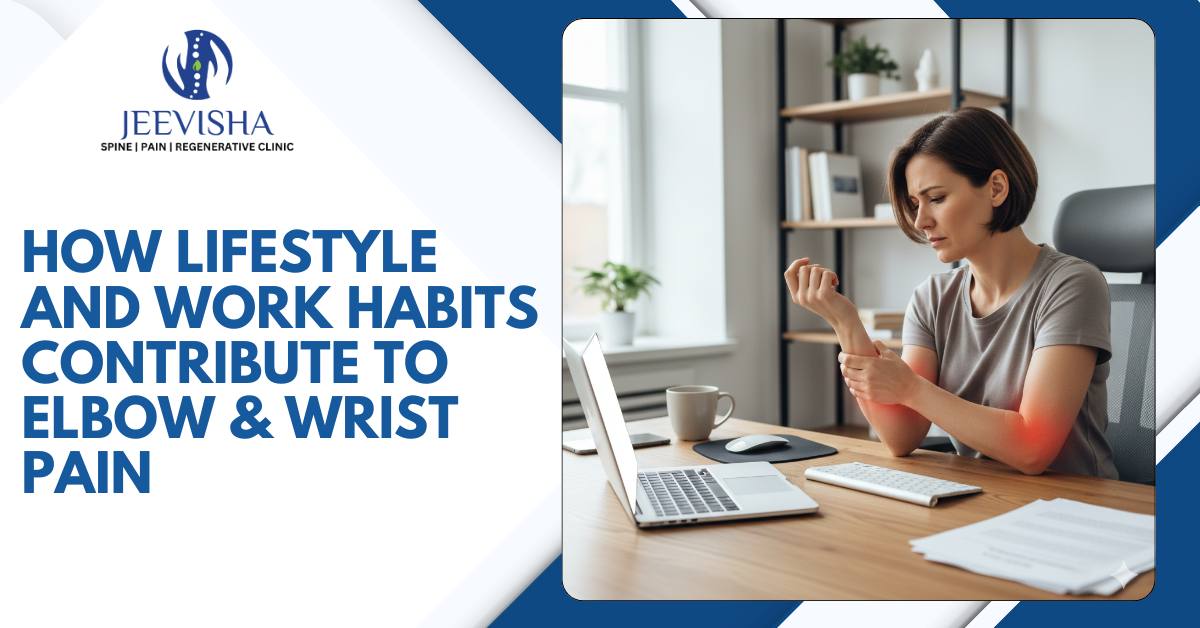
Do your wrists or elbows feel sore after a long day at work? You are not alone. Many people experience discomfort due to daily habits, whether it’s long hours at a computer, repetitive movements, or physical labor. Lifestyle choices and workplace routines play a huge role in elbow and wrist health.
At Jeevisha Spine Pain Regenerative Clinic, we focus on identifying the root causes of pain and helping you prevent long-term issues before they affect your daily life. Our approach is patient-centered, combining expert diagnosis, personalized advice, and practical solutions.
Common Causes of Elbow and Wrist Pain
Elbow and wrist pain often develops gradually rather than suddenly. Some of the most common causes include:
- Repetitive Movements: Typing, mouse use, and frequent lifting can strain tendons and muscles over time.
- Poor Ergonomics: Improper desk setups, incorrect chair height, and bad posture lead to misaligned joints and discomfort.
- Overuse Injuries: Physical labor or sports activities put extra stress on your elbows and wrists, which can result in tendonitis or epicondylitis.
- Sedentary Lifestyle: Weak muscles and poor circulation due to lack of movement make joints more prone to pain and injury.
By identifying these causes early, you can prevent worsening pain and maintain full mobility. emphasizes proactive care to address these issues before they become chronic.
How Lifestyle Choices Increase Pain Risk
Even outside of work, lifestyle habits significantly influence joint health. Poor posture, prolonged sitting, lack of movement, and skipping breaks all contribute to elbow and wrist discomfort. Diet, sleep, and general fitness also impact tendon and muscle strength.
Small adjustments, like taking regular breaks, performing targeted stretches, and maintaining an active lifestyle, can dramatically reduce the risk of pain. Our experts at Jeevisha Spine Pain Regenerative Clinic guide patients through simple, practical lifestyle modifications that make a lasting difference.
Recognizing the Symptoms
Being aware of warning signs helps you take early action. Common symptoms include:
- Tingling, numbness, or weakness in the wrist or hand
- Pain during repetitive tasks
- Swelling or tenderness around the elbow or forearm
- Distinguishing between conditions like tennis elbow, tendonitis, or carpal tunnel syndrome
Early recognition is key to preventing long-term damage and ensuring quicker recovery. Our clinic offers detailed evaluations to pinpoint the exact cause of your pain and recommend a tailored plan.
Ergonomic and Workplace Solutions
Adjusting your work habits and environment can significantly reduce pain. Effective strategies include:
- Ergonomic Workstation Setup: Proper chair, keyboard, and mouse positioning minimizes stress on joints.
- Micro-Breaks and Stretching: Short, frequent breaks increase blood flow and reduce strain.
- Strengthening Exercises: Targeted routines for wrists and elbows help reinforce muscles and tendons.
- Proper Lifting Techniques: Essential for physical labor jobs to reduce repetitive strain injuries.
Medical Evaluation and Treatment Options
Sometimes lifestyle changes aren’t enough, and professional intervention is necessary. Jeevisha Spine Pain Regenerative Clinic provides comprehensive care, including:
- Physical Therapy and Rehabilitation: Personalized exercises to restore strength and mobility.
- Pain Relief Medications: Anti-inflammatory treatments for acute or chronic discomfort.
- Minimally Invasive Procedures: For persistent conditions that don’t respond to conservative care.
Early treatment ensures faster recovery and prevents long-term damage to your joints.
Lifestyle Tips for Long-Term Prevention
In addition to work adjustments, long-term habits help protect your elbows and wrists:
- Incorporate stretching and mobility exercises daily
- Maintain regular physical activity to strengthen muscles
- Monitor posture and adjust your workspace consistently
- Use supportive tools like ergonomic keyboards or wrist braces
These strategies, combined with expert guidance from Jeevisha Spine Pain Regenerative Clinic, create a holistic approach to joint health and pain prevention.
Frequently Asked Questions :-
1. Why does my wrist hurt after typing for long hours?
- Typing for long periods can strain wrist tendons and muscles, causing inflammation. Poor ergonomics, such as incorrect keyboard height, worsen pain. Regular breaks, proper posture, and stretches can help reduce discomfort.
2. How can I prevent elbow pain from repetitive movements?
- Frequent breaks, elbow stretches, and strengthening forearm muscles are essential. Adjusting your work setup to avoid awkward arm positions also prevents repetitive strain injuries.
3. What is the difference between carpal tunnel and tendonitis?
- Carpal tunnel syndrome occurs when the median nerve is compressed, causing numbness and tingling. Tendonitis is tendon inflammation, leading to localized pain. Early intervention prevents worsening symptoms.
4. Can poor posture really cause long-term wrist/elbow issues?
- Yes. Chronic stress on joints from bad posture can lead to conditions like tennis elbow or wrist tendonitis. Correct posture and ergonomic adjustments are vital for prevention.
5. Are ergonomic devices effective for pain prevention?
- Absolutely. Ergonomic chairs, keyboards, and mouse setups reduce joint and muscle strain. Combined with breaks and exercises, they significantly decrease the risk of pain.
6. What exercises help relieve wrist and elbow strain?
- Stretching forearms, strengthening grip muscles, and gentle wrist flexion/extension exercises reduce tension, improve circulation, and prevent repetitive strain injuries..
Book Your Evaluation at Jeevisha Spine Pain Regenerative Clinic
Elbow and wrist pain doesn’t have to control your work or daily life. Jeevisha Spine Pain Regenerative Clinic specializes in identifying the causes of pain and creating personalized prevention and treatment plans.
Schedule Your Consultation – Protect your joints, improve your comfort, and get back to pain-free movement.